
Amid reports of the ongoing coal shortage in the country, Finance Minister Nirmala Sitharaman stressed that there is no shortage and termed these as "absolutely baseless", saying India is a power surplus country. Sitharaman said that Power Minister R K Singh went on record just two days ago when he said absolutely baseless information is floating around that there is probably shortage of coal, shortage of other inventories which will lead to a sudden gap in the supply demand situation in the energy consumption. "Absolute baseless! There is no shortage of anything. In fact, if I recall the minister's statement, every power producing installation has the next four days' stock absolutely available within their own premises and the supply chain has not broken at all," Sitharaman said at Harvard Kennedy School on Tuesday.
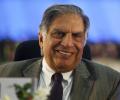
'I think some of us, like Mukesh Ambani, myself and those of us who head industrial units, ought to really focus on what we can really do to make the world a safer place, maybe 50 or 100 years from now.' 'For instance, how can we deal with climate change and global warming, right now?' 'The effects of it may not be felt now; in fact, we may pay a price for it today, but it will help the generations to follow.'

India is the most polluted country in the world, with more than 480 million people or about 40 per cent of its population living in the Indo-Gangetic plains in the north where pollution levels regularly exceed those found anywhere else in the world by an order of magnitude, stated the University of Chicago's Air Quality Life Index (AQLI) report.

For all its claims to economic glory, the majority of India's population lives vulnerable lives, a situation that has only worsened over the past 15 years, to the extent that the government now fears to release economic data or even conduct a proper Census, notes Rathin Roy.

Murray knocked out by Fritz in Washington

India will need to travel back in time and seek inspiration from football greats Tulsidas Balaram and Chuni Goswami to deftly dribble around and sidestep the West-imposed price cap on exports of Russian seaborne crude oil. India depends on imported oil to meet 86 per cent of its needs, of which nearly a quarter now comes from Russia. The copious flows are roughly 10 per cent cheaper than competing suppliers helping India save billions of dollars in fuel costs.

So far, major emitters are far from curbs on emissions on a scale outlined by the IPCC.

In a statement, Greenpeace India said it believed that this leak was a concerted effort by parties with vested interests to ensure elimination of any opposition.
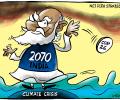
Politicians and Twitter warriors around the globe have a new buzzword among them: Net zero. Everyone appears to be keen to state their commitment to net zero, with India providing an outlay of Rs 35,000 crore to achieve energy transition and net-zero objectives in its Budget for FY24, even as the latest and final report by the United Nations' Intergovernmental Panel on Climate Change (IPCC) warned that current efforts are not enough to curb global warming. A number of small factory owners and businesses, however, have pointed out that the transition to net-zero emissions will cost them hugely.
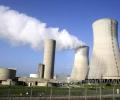
These reactors would bring clean energy to India and generate thousands of jobs in the US

Prime Minister Narendra Modi on Saturday announced the adoption of the New Delhi Leaders Declaration, a significant victory for India's G20 presidency that came amid increasing tensions and divergent views over the Ukraine conflict.

We lost the gains of Rio and Kyoto in Copenhagen and Paris, but it would have been worse, if any mandatory restraints were imposed on our green house gas emissions, says Ambassador T P Sreenivasan.
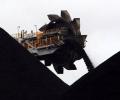
The mine got the sign-off from Environment Minister Greg Hunt in October after the company cleared concerns about two rare outback species

The President said he made the decision in consultation with European allies but added they may not be in a position to join the US in banning Russian energy imports.
India's most valuable company Reliance Industries was once fined for producing more than its licensed capacity, its owner and richest Indian Mukesh Ambani said on Monday as he pitched for a push to manufacturing to make the country 'Aatmanirbhar' or self-reliant.

India Meteorological Department has predicted deficient rains.

The trend is expected to gain momentum as global vehicle makers in India, particularly from Japan, ride on hybrids to meet the more stringent fuel efficiency norms that take effect in 2022.
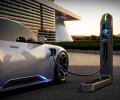
When it comes to electric cars, the electric dream is turning out to be a six-letter word starting with f, ending with y, and having antas in between, notes Suveen Sinha.
Asia's richest man Gautam Adani, besides looking at opportunities to expand his vast empire, is hooked on ChatGPT - the programme that trawls vast amount of information to generate natural-sounding text on virtually anything - from crafting jokes to writing ad copy, debugging computer code, to even generating poems and essays. Adani, whose conglomerate has in recent years diversified from mines, ports and power plants into airports, data centres and defence, penned musing from his visit to Davos to attend the World Economic Forum meeting. "From a meetings perspective, this was perhaps my busiest WEF as I met over a dozen heads of states and several business leaders," he wrote on LinkedIn, talking of new geopolitical couplings, climate change and tight-lipped evangelists and AI.

The trio used the same principles of evolution -- genetic change and selection -- to develop proteins used in a range of fields.

Heads of state and big-name billionaires opened the Paris climate summit with a bang on Monday.
"Climate change is a major global challenge. But it is not of our making," Modi said.

Human Development -- a measure of a nation's health, education, and average income -- has declined for two years in a row.
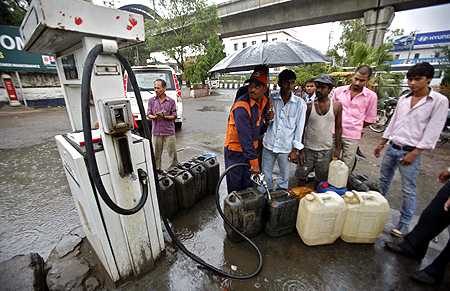
Global supply is staying in excess of demand.

However, 63 per cent Indians were "satisfied" with their standard of living

Representing India at the 'High-Level Segment for Heads of States and Government' at the UN COP26 underway at Glasgow, UK, Prime Minister Modi said that India is working very hard on tackling climate change related issues.
If you opt for a petrol variant, you will need to reapply for loan.

Step on the gas and the power that propels the compact four-seater will take you by surprise as it hurtles towards the 80 kmph like a racing thoroughbred, never compromising any stability thanks to its rigid chassis and solid 1,600-kg kerb weight that gives it a well-planted feel along straights, corners and tricky lanes and roads, says Pavan Lall.

Higher prices are burdening household budgets and threatening the margins of leading manufacturers.

The scheme, which was earlier implemented by the coal companies, has been extended for the current fiscal also.

India's electric mobility goal, which has so far been riding on two wheels, is all set to graduate to four wheels. At least, the journey has begun. Hyundai Motor India said it would invest Rs 4,000 crore till 2028 to launch half-a-dozen electric vehicles (EVs) in India. It would eventually straddle premium and mass segments. The first of these - the electrified version of an internal combustion engine (ICE)-powered model - will go on sale as early as next year.

The mine, designed to eventually produce 60 million tonnes a year of thermal coal used in power stations, has been the focus of opposition by green groups fighting new coal mines and the rail and ports needed to ship the coal.

India's dependence on imported crude oil to meet domestic demand has been a matter of concern for years. Delivering the inaugural address at the global energy summit - Urja Sangam - in 2015, Prime Minister Narendra Modi had called for enhancing domestic oil and gas production to cut the import burden. He aimed at lowering it by at least 10 per cent by 2022 - to coincide with the platinum jubilee of India's independence. But this target is far from being achieved and the country's import reliance has only risen.

Your smartphones could soon help you combat a deadly form of air pollution, thanks to a new low-cost and reliable method of detecting nitrogen dioxide.

'If every city had the strongest tools that are currently available only to a few, the world's climate prospects would glow far more brightly.'

India will become the largest single source of global oil demand growth after 2020, the International Energy Agency said.
If IOC is not allowed to run its own affairs, then we can see it close down in the next 10 to 15 years, warns Sudhir Bisht.
A few years ago, when top officials of Indian state-run refiners went to Dubai to negotiate a crude oil supply contract, a senior official from state-owned Saudi Aramco told them, "We can negotiate on anything, but I am the last man standing for you. "Nobody can offer the range of crudes we do with certainty," an official who was part of the negotiating team recalls. Perhaps that explains why Saudi Arabia is less concerned about losing its place as India's premier oil supplier to an upstart like Russia, which emerged from nowhere to become India's biggest crude oil supplier in September and October.

Subject to finance & tech from rich countries through an ambitious, fair Paris deal

Unfortunately, in India, infrastructure projects are lost in a miasma of political and personal vanity, observes Shyam G Menon.
